Collaborative Doctoral Research

Photopolymer Composite Additive Manufacturing

Conventional construction-printing materials face challenges in balancing extrusion with the stabilization needed to retain deposited shapes. This collaborative doctoral research investigates an alternative dual-curing photopolymer composite for extrusion-based additive manufacturing of civil infrastructure. The project brings together material development, printability evaluation, data-driven formulation screening, printing demonstrations, and material characterization to investigate rapid stabilization during deposition and the evaluation of printed specimens.

Photopolymer compositesAdditive manufacturingCivil infrastructure
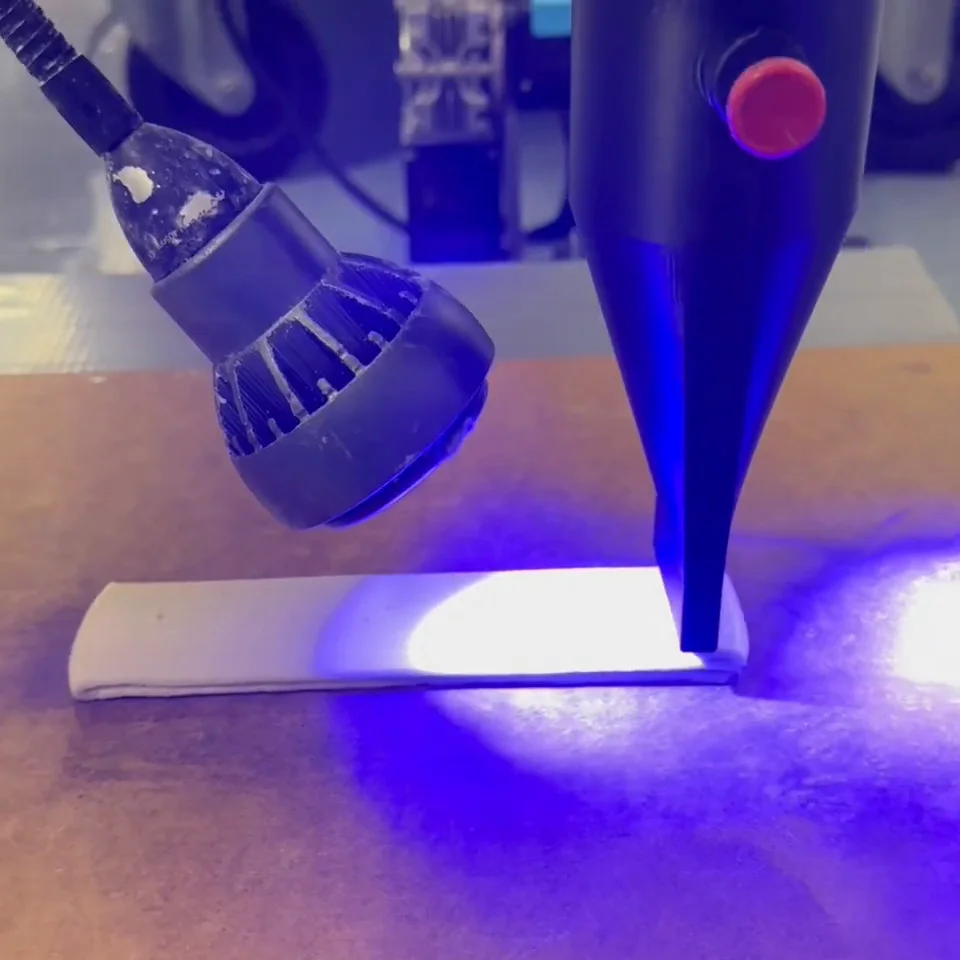
Printing nozzle depositing photopolymer composite under UV illumination
UV-Assisted Photopolymer Composite Printing

Collaborative contribution

Co-developed and experimentally evaluated dual-curing photopolymer composites, focusing on material formulation, rheological properties, printability, and UV/thermal curing behavior. Integrated machine-learning-assisted formulation screening with UV-assisted 3D printing and experimental material characterization to investigate processing behavior, curing performance, and mechanical properties of printed specimens.

Material and Curing Approach

The research investigates a dual-curing photopolymer composite that combines UV-assisted photopolymerization with a thermal-curing mechanism. UV illumination supports rapid stabilization of deposited material during extrusion, while thermal curing forms part of the material system’s curing approach.

The investigation considers how material flow, extrusion consistency, and stabilization influence deposited shape, interlayer behavior, and deposited material stability during printing. Curing characteristics and limitations are examined alongside printability; UV exposure is not assumed to cure the full material thickness instantaneously.
FROM MATERIAL TO PRINT

Research Workflow

  1. 01

    Material Development

    Development of a printable photopolymer composite material system.

  2. 02

    Printability Evaluation

    Evaluation of flow behavior, extrusion consistency, and deposited shape.

  3. 03

    Formulation Screening

    Material characterization and data-driven screening to guide formulation selection.

  4. 04

    Additive Manufacturing

    Extrusion-based printing with UV-assisted material stabilization.

  5. 05

    Material Characterization

    Investigation of mechanical behavior, curing characteristics, and printed specimen performance.

EXTRUSION AND STABILIZATION

Experimental Printing Demonstrations

Photopolymer Composite Printing 8× speed
UV-Assisted Printing Demonstration 8× speed

RESEARCH IN VIEW

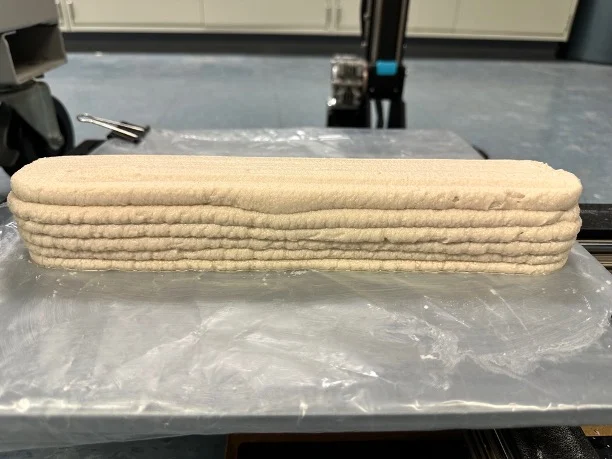
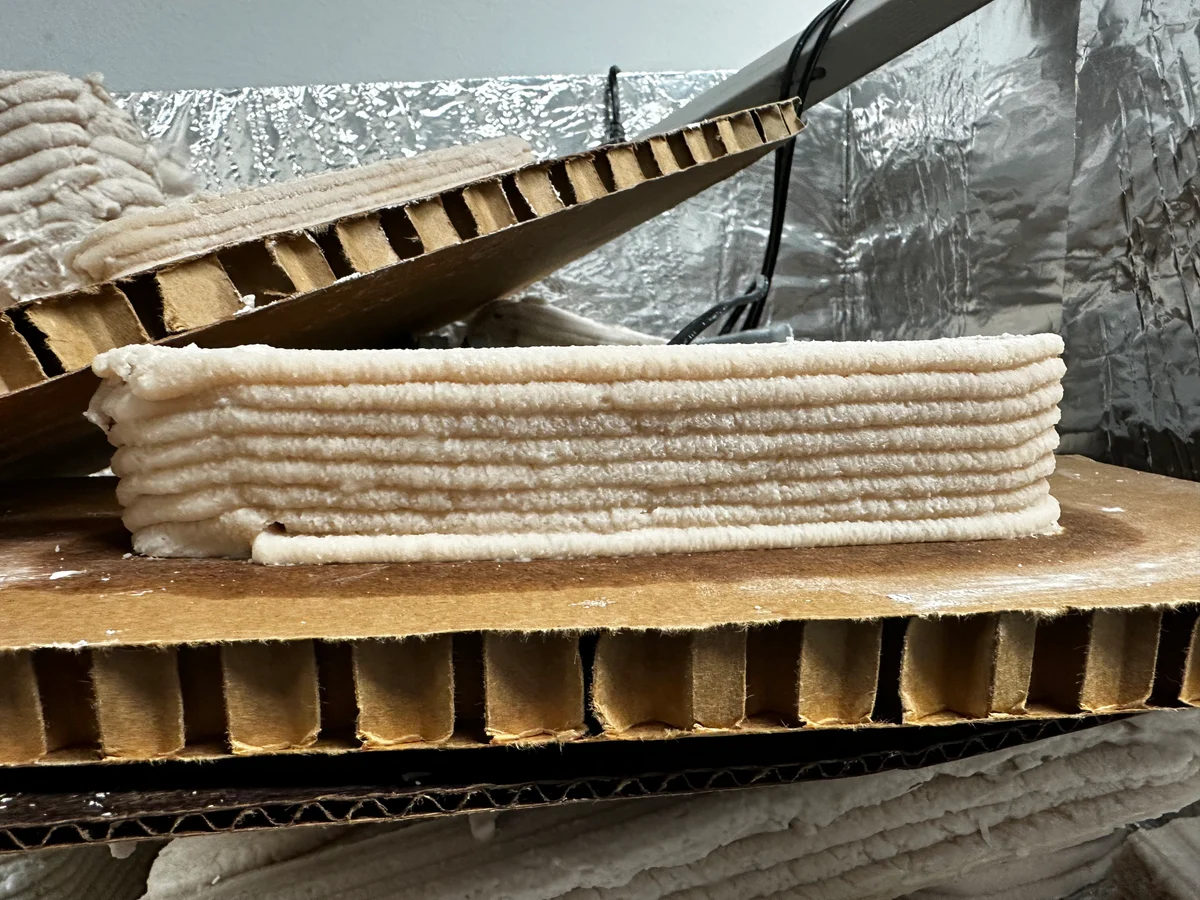
Material Characterization and Printed Specimens

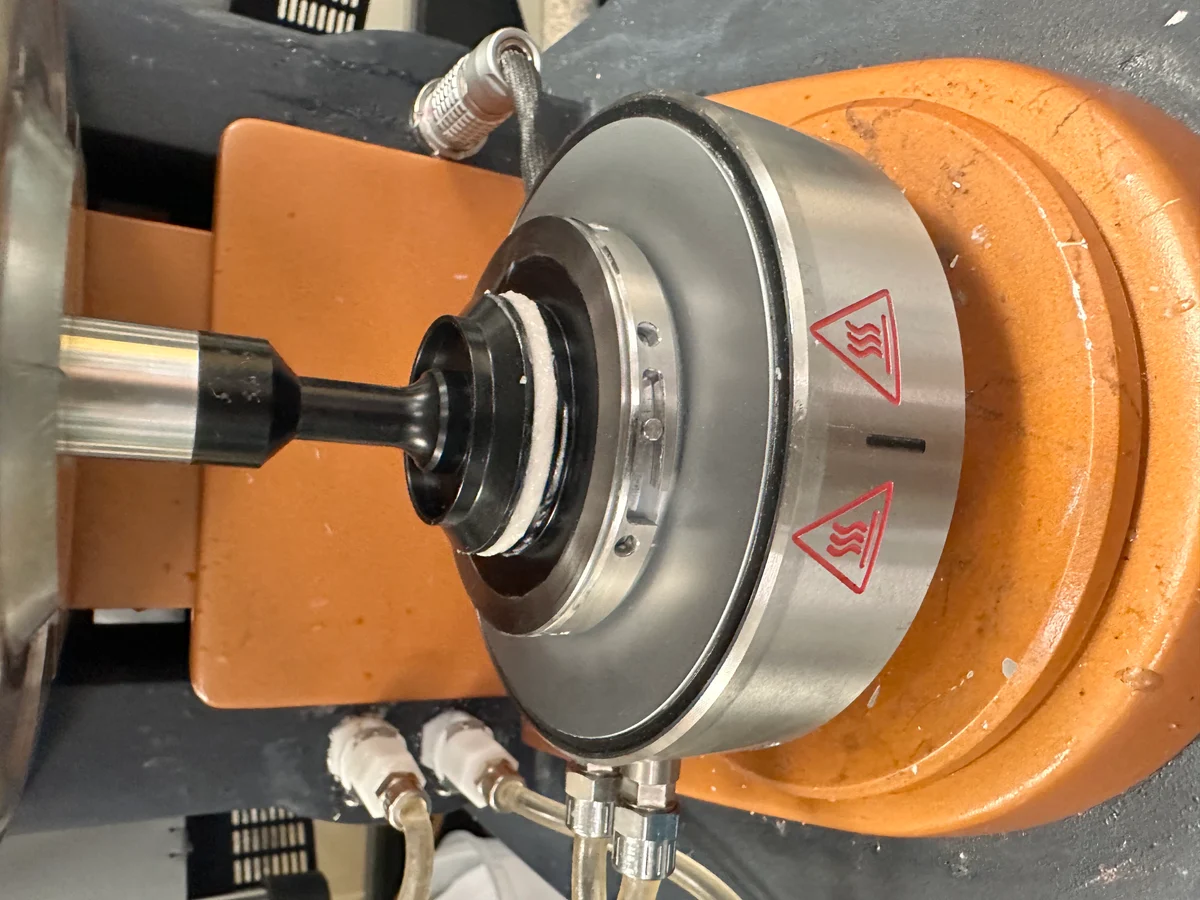
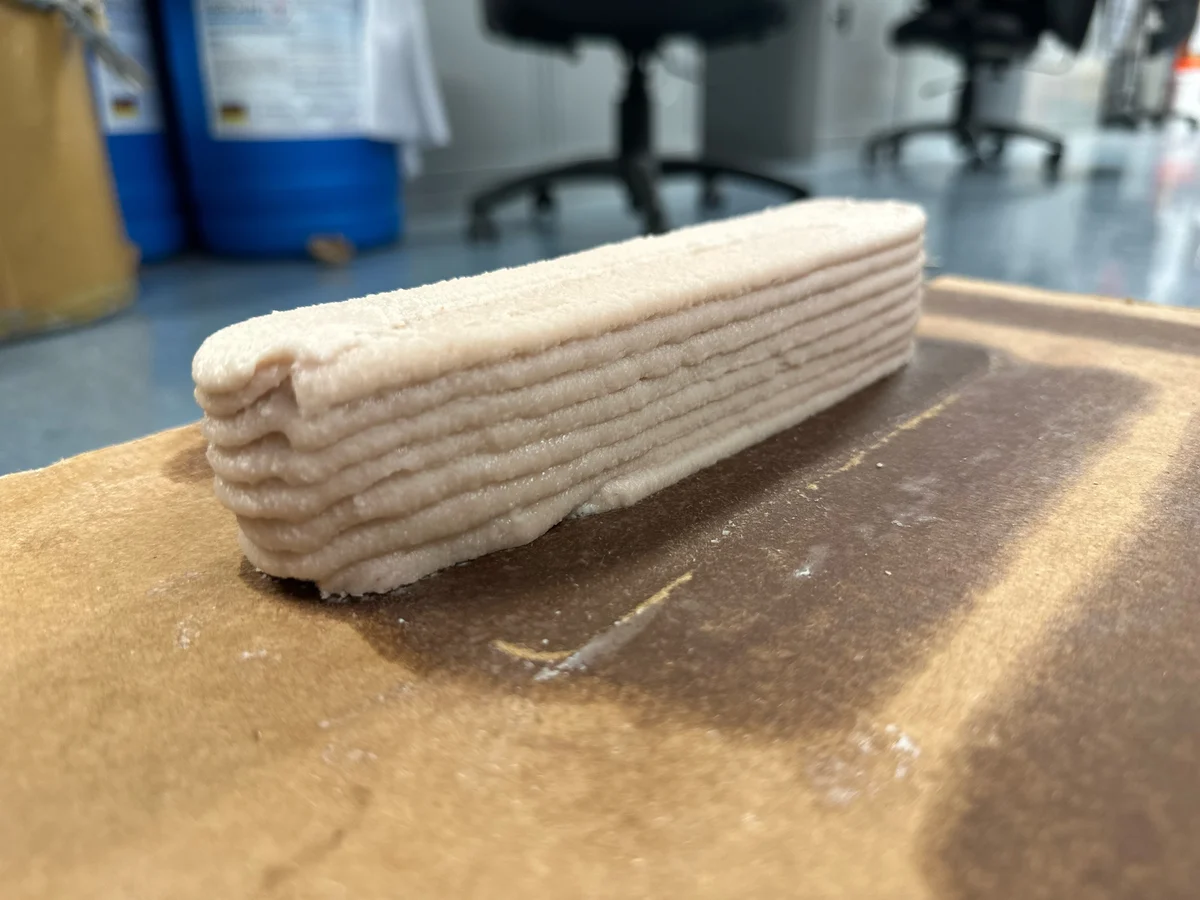
Printability characterization examines rheological behavior, extrusion consistency, and deposited shape. Curing investigations, mechanical characterization, and printed specimen evaluation explore how processing and material behavior influence the printed material and its interlayer behavior.

COLLABORATIVE DOCTORAL RESEARCH

Manuscript Under Review

Instant-cure high-strength photopolymer composite for additive manufacturing of civil infrastructure

Abdul Wahid Mangi, Muhammad Arslan, Vedhus Hoskere

Advanced Composites and Hybrid Materials
Springer Nature